


Blending Science and Craftsmanship: Valio’s Approach to Dairy Nutrition for the Elderly
By Cath Isabedra
/ April 11, 2024
In an era marked by increasingly complex nutritional needs and a rapidly aging global population, the food industry faces a...
Read More
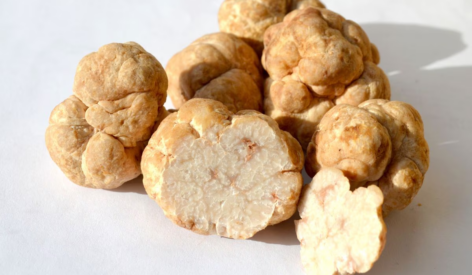
MycoTechnology’s Honey Truffle Sweetener Achieves New Technical and Safety Milestones on Accelerated Path to Market
By Asia Food Journal
/ April 19, 2024
Following the ground-breaking discovery of a new sweet protein from honey truffles last year, MycoTechnology, Inc. has made significant strides...
Read More

FrieslandCampina Ingredients inspires innovation with new consumer-driven concepts at Vitafoods Europe 2024
By Asia Food Journal
/ April 19, 2024
FrieslandCampina Ingredients , a global leader in protein and prebiotics, will return to Vitafoods Europe (14-16 May) in Geneva, Switzerland,...
Read More

IFF Opens New Co-Creation Center in Wageningen
By Asia Food Journal
/ April 19, 2024
IFF (NYSE: IFF) today announced the opening of a new co-creation center in Wageningen, the Netherlands, enhancing its capabilities and...
Read More

Ingredion to demonstrate sugar reduction and affordability solutions at Djazagro 2024
By Asia Food Journal
/ April 18, 2024
Ingredion experts will be on hand at the Djazagro exhibition to demonstrate how its ingredient solutions can help food and...
Read More


Research shows food and beverage companies committed to plastic reduction, prompted by consumer demand
By Asia Food Journal
/ April 16, 2024
Today’s food F&B companies are poised to minimise plastic as a favoured packaging material, as recent research has unveiled that...
Read More

Process Reliability in Tube Production: How PackSys Global Optimizes Production Using SIKO Technology
By Asia Food Journal
/ April 15, 2024
Large tubes, small tubes, long tubes, thick tubes, flat tubes, miniature tubes—tubes are produced in countless sizes and formats for...
Read More
MycoTechnology’s Honey Truffle Sweetener Achieves New Technical and Safety Milestones on Accelerated Path to Market
By Asia Food Journal
/ April 19, 2024
Following the ground-breaking discovery of a new sweet protein from honey truffles last year, MycoTechnology, Inc. has made significant strides...
Read More
FrieslandCampina Ingredients inspires innovation with new consumer-driven concepts at Vitafoods Europe 2024
By Asia Food Journal
/ April 19, 2024
FrieslandCampina Ingredients , a global leader in protein and prebiotics, will return to Vitafoods Europe (14-16 May) in Geneva, Switzerland,...
Read More
MycoTechnology’s Honey Truffle Sweetener Achieves New Technical and Safety Milestones on Accelerated Path to Market
By Asia Food Journal
/ April 19, 2024
Following the ground-breaking discovery of a new sweet protein from honey truffles last year, MycoTechnology, Inc. has made significant strides...
Read More
IFF Opens New Co-Creation Center in Wageningen
By Asia Food Journal
/ April 19, 2024
IFF (NYSE: IFF) today announced the opening of a new co-creation center in Wageningen, the Netherlands, enhancing its capabilities and...
Read More

Non-destructive on-site analysis of organic substances using a small modular spectrometer platform
By Asia Food Journal
/ April 3, 2024
Compact and ultra-compact near-infrared (NIR) spectroscopy systems for the evaluation of organic substances are critical to industries as diverse as...
Read More

Mettler-Toledo Announces Flow Wrap Applications Webinar
By Asia Food Journal
/ March 25, 2024
Mettler-Toledo Product Inspection, a global leader in product safety technologies, is pleased to announce its upcoming webinar titled "4 Steps...
Read More