



Ingredion to tackle increasing formulation challenges in non-dairy cheese at Dairy Innovation Strategies 2024
By Asia Food Journal
/ April 24, 2024
Ingredion will highlight its formulation expertise, on-trend solutions and collaborative approach to innovation for non-dairy cheese manufacturers at the Dairy...
Read More

IFF Trends Report: Added Value Key to Success in Inflation-hit Dairy Space
By Asia Food Journal
/ April 24, 2024
New research into dairy and alternative dairy trends highlights the advantages of offering functional health benefits and connecting with consumers’...
Read More
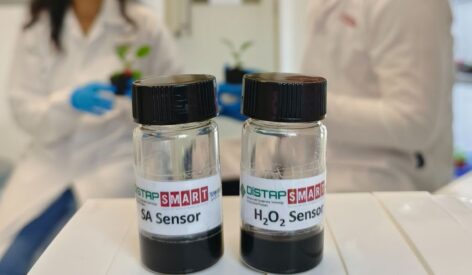
SMART Researchers Pioneer Sensor Multiplexing for Real-Time Decoding of Different Plant Stresses
By Asia Food Journal
/ April 24, 2024
Researchers from the Disruptive & Sustainable Technologies for Agricultural Precision (DiSTAP) Interdisciplinary Research Group (IRG) of Singapore-MIT Alliance for Research...
Read More
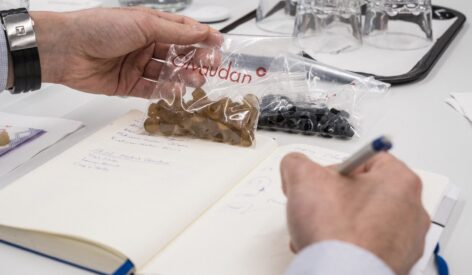
Givaudan to showcase the power of botanicals at Vitafoods Europe with consumer-centric experiences that deliver proven benefits and superior taste
By Asia Food Journal
/ April 23, 2024
Givaudan will showcase consumer-inspired concepts, such as instant drinks and gummies that feature its branded botanical ingredients at Vitafoods Europe...
Read More


Brenntag Specialties to showcase innovative polymer and wax solutions at Chinaplas, Asia’s premier plastics and rubber exhibition
By Asia Food Journal
/ April 22, 2024
Brenntag, the global market leader in chemicals and ingredients distribution, is thrilled to announce its participation in Chinaplas 2024 at...
Read More

Research shows food and beverage companies committed to plastic reduction, prompted by consumer demand
By Asia Food Journal
/ April 16, 2024
Today’s food F&B companies are poised to minimise plastic as a favoured packaging material, as recent research has unveiled that...
Read More
Ingredion to tackle increasing formulation challenges in non-dairy cheese at Dairy Innovation Strategies 2024
By Asia Food Journal
/ April 24, 2024
Ingredion will highlight its formulation expertise, on-trend solutions and collaborative approach to innovation for non-dairy cheese manufacturers at the Dairy...
Read More
Givaudan to showcase the power of botanicals at Vitafoods Europe with consumer-centric experiences that deliver proven benefits and superior taste
By Asia Food Journal
/ April 23, 2024
Givaudan will showcase consumer-inspired concepts, such as instant drinks and gummies that feature its branded botanical ingredients at Vitafoods Europe...
Read More

Axelum seals multi-year deal with Vita Coco
By Asia Food Journal
/ April 22, 2024
Axelum Resources Corp. (PSE: AXLM), the country’s leading fully-integrated manufacturer and exporter of premium coconut products, signed today a multi-year...
Read More
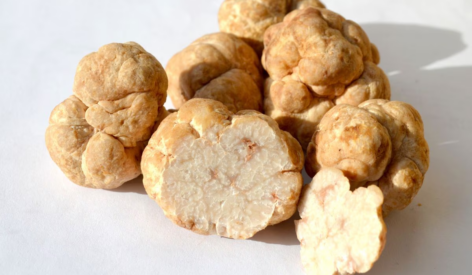
MycoTechnology’s Honey Truffle Sweetener Achieves New Technical and Safety Milestones on Accelerated Path to Market
By Asia Food Journal
/ April 19, 2024
Following the ground-breaking discovery of a new sweet protein from honey truffles last year, MycoTechnology, Inc. has made significant strides...
Read More

Mettler-Toledo Presents Cutting-Edge Product Inspection Solutions at SnackEx
By Asia Food Journal
/ April 22, 2024
Mettler-Toledo to showcase advanced product inspection technologies to snack manufacturers under the theme ‘Relax, we have got you covered’
Read More

Non-destructive on-site analysis of organic substances using a small modular spectrometer platform
By Asia Food Journal
/ April 3, 2024
Compact and ultra-compact near-infrared (NIR) spectroscopy systems for the evaluation of organic substances are critical to industries as diverse as...
Read More